Hotra: A Dark Gothic Display Font for Bold Design
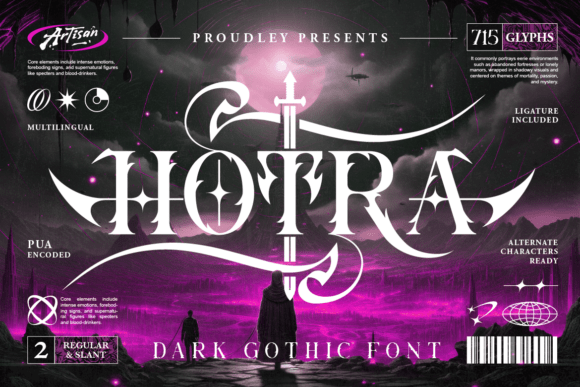
Typography serves as the visual voice of any creative project, and when a design requires an atmosphere of mystery, history, or intensity, standard typefaces often fall short. Hotra is a dark gothic display font specifically engineered to bridge the gap between aggressive aesthetics and refined elegance. Inspired by occult symbolism, medieval darkness, and mystical fantasy realms, this typeface offers designers a specialized tool for creating powerful visual narratives. Unlike generic blackletter fonts that can feel dated or illegible, Hotra balances sharp serifs and dramatic curves with modern usability, making it a practical choice for contemporary branding and artistic projects that demand a strong, eerie presence.
Establishing Atmosphere Through Typographic Detail
The primary value of Hotra lies in its ability to instantly communicate tone without relying on additional graphic elements. The blade-like details and dramatic curves inherent in the letterforms create a sense of tension and intrigue that is difficult to achieve with standard serif or sans-serif families. For designers working on movie posters, book covers, or album art, this means the title treatment itself becomes a core part of the storytelling. Instead of treating text as merely informational, Hotra allows the typography to function as an illustrative element. The sharp terminals evoke weaponry and ritualistic tools, while the overall structure maintains enough classical proportion to remain readable at display sizes. This duality makes it particularly effective for genres like dark fantasy, horror, and heavy metal, where the audience expects a specific visual language before they even consume the content.
Leveraging Alternates and Ligatures for Customization
A common limitation in thematic display fonts is a lack of versatility; once you have set a headline, the font may look repetitive or rigid. Hotra addresses this through an extensive collection of stylistic alternates and ligatures. With hundreds of glyphs included, designers can avoid the "copy-paste" aesthetic that often plagues themed typography. Practical application of these features allows for unique logo construction and custom wordmarks without the need for manual vector drawing. For example, if a brand name contains repeating letters, utilizing different alternates prevents visual monotony and adds a handcrafted quality. Ligatures smooth out awkward spacing issues common in sharp, angular typefaces, ensuring that the final composition flows naturally. This level of built-in customization saves significant production time, allowing freelancers and agencies to deliver bespoke typographic solutions without starting from scratch.
Practical Applications Across Creative Industries
While Hotra is undeniably niche, its utility extends across various professional sectors where distinct branding is necessary. Understanding where this font performs best helps designers make informed decisions about resource allocation.
- Gaming and Entertainment: Indie game developers and studios can utilize Hotra for in-game UI headers, promotional trailers, and merchandise. The font’s medieval inspiration aligns perfectly with RPGs, roguelikes, and narrative-driven adventures, providing AAA-level typographic polish on an indie budget.
- Apparel and Merchandise: Streetwear brands and band merch designers benefit from the font's high-contrast details, which reproduce well in screen printing and embroidery. The sharp serifs translate effectively to fabric, maintaining legibility and impact even on textured materials.
- Publishing and Editorial: Book cover designers working in speculative fiction, true crime, or esoteric non-fiction can use Hotra to signal genre conventions to potential readers. The multilingual support ensures that translated editions maintain consistent branding across international markets.
- Niche Branding: Businesses in the alternative lifestyle space, such as tattoo parlors, occult shops, or craft breweries, can establish immediate credibility. Using a font with genuine gothic roots rather than a novelty imitation signals authenticity to a discerning subculture audience.
Navigating File Formats and Technical Compatibility
Technical flexibility is just as important as aesthetic appeal in a professional workflow. Hotra is available in both OTF and TTF formats for both the Regular and Slant variations. OpenType (OTF) is generally preferred for design software like Adobe Illustrator, InDesign, and Affinity Designer because it fully supports the advanced typographic features, including the extensive alternate sets and ligature substitutions. TrueType (TTF) remains essential for compatibility with older systems, certain video editing software, or web embedding scenarios where OTF support might be inconsistent. Having both file types ensures that the font remains accessible regardless of the platform or software version being used. Additionally, the inclusion of a dedicated Characters Map file is a significant practical benefit. Rather than guessing which glyph corresponds to which keystroke, designers can visually reference the map to locate specific alternates or symbols, streamlining the exploration process and reducing frustration during tight deadlines.
Balancing Impact with Readability Constraints
Despite its strengths, Hotra is a specialized instrument, and recognizing its limitations is crucial for successful implementation. As a display font, it is designed for headlines, titles, and short bursts of text. It is not suitable for body copy, captions, or extended reading passages. The intricate details and high contrast that make it striking at large sizes will cause it to break down or become fatiguing to read at small point sizes. Designers should pair Hotra with a clean, neutral sans-serif or a simple serif for supporting text to create hierarchy and ensure accessibility. Furthermore, while the font supports multiple languages, users should always test specific character sets required for their project, as specialized diacritics in less common languages may default to standard forms. Testing in context is always recommended to ensure the blade-like details do not clash with busy background imagery or complex illustrations.
Making Informed Typographic Choices
Selecting Hotra should be a deliberate decision based on project goals rather than trend following. It excels when the objective is to evoke emotion, suggest history, or create a sense of forbidden knowledge. However, for corporate finance, healthcare, or family-friendly products, the occult and aggressive undertones would likely send the wrong message. Professionals should evaluate whether the target audience resonates with dark aesthetics and whether the font’s personality aligns with the brand’s long-term identity. When used appropriately, Hotra does more than decorate a page; it anchors the entire visual strategy. By combining historical inspiration with modern OpenType functionality, it provides a reliable foundation for creators who need their typography to carry as much weight as their imagery. Whether crafting a mysterious game title or an elegant gothic logo, Hotra offers the specific tools needed to transform abstract concepts into tangible, impactful design.