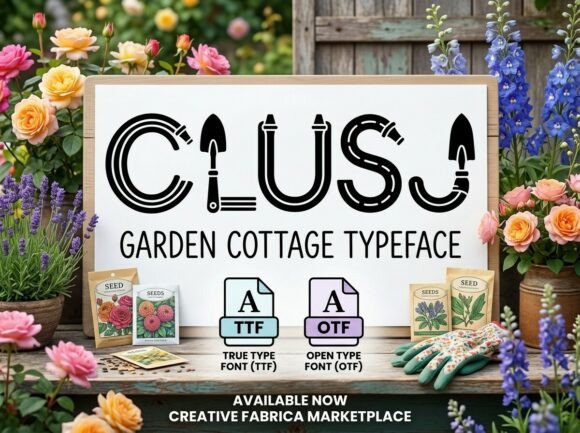
Clusj: A Bold Decorative Font for Impactful Design
In the vast landscape of digital typography, finding a typeface that genuinely stops the scroll is a rare achievement. Clusj enters this space not as a utility for body text, but as a dedicated instrument for visual storytelling. This decorative display font is engineered specifically to be the center of attention, featuring unique artistic elements and a strong visual personality that distinguishes it from standard sans-serif or serif options. For creators looking to break away from the ordinary, Clusj offers a polished yet distinct aesthetic that bridges the gap between avant-garde art and professional commercial design.
Understanding Clusj requires recognizing its specific role in a designer's toolkit. It is not a workhorse font intended for paragraphs or user interfaces. Instead, it serves as a focal point. The letterforms are crafted with intricate details that demand space and respect. When evaluating this typeface, the primary consideration should always be impact. Whether you are a seasoned art director or a small business owner designing your first product label, the value of Clusj lies in its ability to transform a simple word into a graphical element.
Evaluating Clusj Across Different Skill Levels
The way a typeface performs often depends heavily on who is wielding it. Clusj presents different advantages and considerations depending on your experience level and technical comfort.
For Beginners and Hobbyists
If you are new to graphic design or working on personal creative projects, Clusj offers an immediate upgrade to visual quality without requiring advanced typographic manipulation. Because the font carries so much inherent character, it reduces the pressure to create complex layouts. A single word set in Clusj against a solid background can serve as a complete poster or social media graphic. For hobbyists creating content for blogs, scrapbooks, or personal branding, this font acts as a shortcut to a professional look. The learning curve here is minimal; the challenge is simply knowing when to let the font speak for itself rather than overcrowding it with other decorative elements.
For Professional Designers and Agencies
Experienced users will appreciate Clusj for its technical execution and stylistic restraint. Professionals understand that decorative fonts can easily veer into illegibility or poor spacing. Clusj maintains a polished finish that allows it to function in high-end commercial contexts. For art directors and freelancers, the value proposition includes reliability. You can trust that the kerning and weight distribution will hold up in large-format printing or detailed packaging mockups. The priority for this group is often flexibility within a niche; Clusj provides enough variation in texture to feel custom while remaining consistent enough for cohesive brand campaigns.
Strategic Applications for Business and Education
Beyond individual skill levels, the utility of Clusj shifts based on organizational goals and audience expectations. What matters to a marketer differs vastly from what matters to an educator or publisher.
Entrepreneurs and Small Business Owners
For business owners, every design choice must justify its existence through brand recognition or conversion. Clusj is particularly relevant for industries where shelf presence or digital thumb-stopping power is critical. Think of artisanal food packaging, boutique fashion labels, or craft beverage branding. In these contexts, the font communicates quality and craftsmanship before the customer reads a single ingredient list. However, business owners must also prioritize clarity. While Clusj is artistic, ensure it aligns with your brand voice. If your business relies on quick information processing, this font should be reserved strictly for logos and primary headers, never for pricing or essential product details.
Educators and Content Creators
In educational settings or content creation, engagement is the currency. Educators designing course materials, workshop flyers, or presentation slides can use Clusj to signal transitions or highlight key themes. It breaks the monotony of standard academic formatting, making learning materials feel more dynamic and less sterile. Similarly, bloggers and influencers can use this typeface to create signature assets that reinforce their personal brand identity. For these users, the priority is often speed and presentation. Clusj allows for the rapid creation of visually striking thumbnails and title cards that maintain a consistent aesthetic across platforms.
Technical Specifications and File Formats
To integrate Clusj effectively into your workflow, understanding the included file formats is essential. The package is designed to cover both professional and general-use scenarios.
- OTF (OpenType Font): This is the professional standard and the preferred format for advanced design software like Adobe Illustrator, InDesign, and Affinity Designer. OTF files typically support better rendering on screen and print, along with advanced typographic features. If you are doing layout work or preparing files for commercial printing, this should be your default choice.
- TTF (TrueType Font): This format ensures universal compatibility. It is ideal for users working in Microsoft Office, Canva, Cricut Design Space, or older operating systems. TTF guarantees that the font will install and display correctly across virtually all devices, making it the safer bet for non-designers or cross-platform collaboration.
Critical Usage Constraints: The Uppercase Factor
Before incorporating Clusj into any project, there is one non-negotiable specification to internalize: this is an ALL-CAPS uppercase-only display typeface. It does not include lowercase letters. This is not a limitation but a deliberate design feature intended to maximize visual impact.
This constraint fundamentally changes how you should approach typesetting. Without lowercase letters to provide rhythmic variation, Clusj functions best in short bursts. It is specifically designed for high-impact headlines, logos, and decorative initials where every letter is treated as a standalone work of art. Attempting to force this font into sentence case or long-form text will result in a jarring, unreadable block of uniform shapes.
For beginners, this means resisting the urge to type out full sentences. For professionals, it means planning hierarchy carefully. Pair Clusj with a clean, highly legible sans-serif or serif for subheads and body copy. The contrast between the ornate, uniform height of Clusj and the varied x-height of a supporting font creates a sophisticated tension that elevates the entire composition. If your project requires extensive reading or conversational tone in the headline, Clusj may not be the appropriate tool. However, if the goal is to create a bold, iconic statement where brevity equals power, this uppercase-only structure is exactly what delivers that result.
Determining If Clusj Matches Your Goals
Selecting the right typeface is ultimately about alignment between the tool and the task. Clusj is a specialized asset. It excels when the objective is to evoke emotion, establish luxury, or command attention through artistic form. It is less suitable for projects prioritizing information density, neutrality, or extended reading comfort.
Ask yourself what role the headline plays in your specific project. Is it merely a label, or is it the primary visual hook? If you are a freelancer pitching a rebrand, does the client need safe corporate consistency, or do they need a disruptive visual identity? If you are a consumer looking for a font for a wedding invitation, does the all-caps structure fit the formality and layout of your card stock?
By evaluating Clusj through the lens of your specific priorities—whether that is ease of use, commercial viability, or pure creative expression—you can determine if its bold, uppercase-only personality is the missing piece in your next design. When used with intention and respect for its decorative nature, Clusj transforms from a simple collection of vectors into a powerful catalyst for memorable visual communication.